
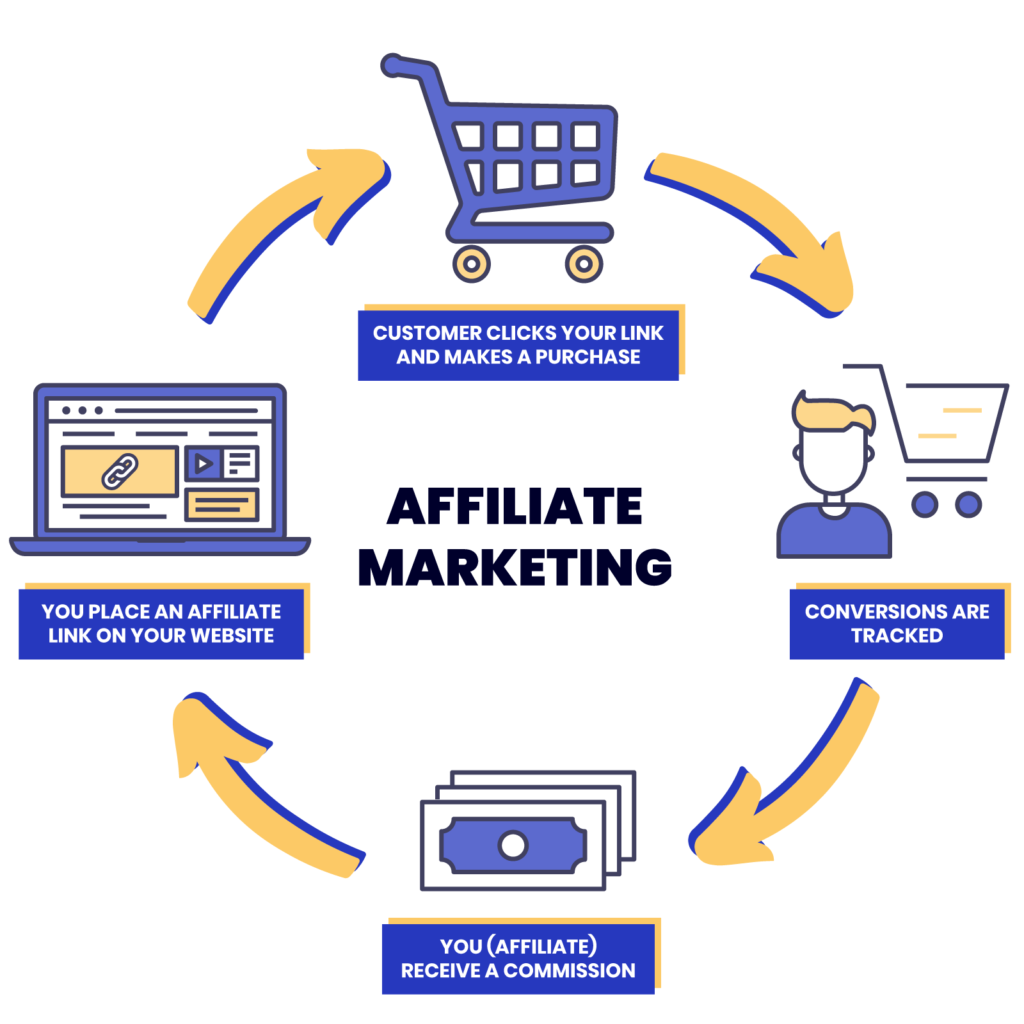
Affiliate marketing is a performance-based business model where you earn commissions by promoting other people’s products.
It offers a low-cost entry point and the potential for passive income, but also comes with competition and income variability.
Success in affiliate marketing requires choosing the right niche, creating quality content, and building trust with your audience.
Understanding the pros and cons is crucial to crafting effective affiliate marketing strategies.
Tools and trends in the affiliate marketing space are continuously evolving, making it important to stay informed and adaptable.
Defining Affiliate Marketing: The Basics
At its core, affiliate marketing is about relationships—between you, the advertiser, and the consumer. You promote products or services through your website, social media, or other platforms, and when someone makes a purchase using your unique affiliate link, you earn a commission. It’s that simple. No need to create products or handle customer service; your job is to connect the dots.
The Core Components of Affiliate Programs
Every affiliate program has a few key players: the merchant (also known as ‘retailer’ or ‘brand’), the affiliate (that’s you), and the customer. But there’s more to it than just these three. You’ve also got the affiliate network which acts as the intermediary, tracking sales and handling payouts, and the affiliate manager who oversees the partnership. Together, they make the affiliate marketing world go round.
Why Affiliate Marketing Could Be Your Launchpad
If you’re looking to dive into the world of online business, affiliate marketing might just be the perfect starting block. It’s flexible, scalable, and you don’t need a degree in marketing to get started. Plus, with the internet in your corner, the potential reach is massive. You could be making sales in your sleep!
Earning Passive Income: How Affiliate Marketing Pays Off
Imagine earning money while you’re out for a run, or even while you’re snoozing. That’s the beauty of passive income through affiliate marketing. Once you’ve set up your affiliate links and crafted content that draws in your audience, those links can continue to earn you money with minimal ongoing effort. It’s not a get-rich-quick scheme, but it’s a solid way to build up an income stream over time.
Minimal Investment Needed: A Cost-Effective Approach
You don’t need a huge startup capital to get into affiliate marketing. With a domain name and hosting for your website, you can be up and running for less than the cost of a new pair of sneakers. And because you’re promoting existing products, there’s no need to spend big bucks on product development or inventory.
Reaching a Global Audience: Affiliate Marketing’s Wide Net
Your online presence means you’re not limited to your local community or even your country. Affiliate marketing allows you to tap into a global market, reaching people from all corners of the world. With the right strategy, your affiliate business can cross borders without you ever having to leave home.

Crafting Your Flexible Work Schedule: The Freedom To Choose
One of the biggest perks of affiliate marketing is the flexibility it offers. You’re the boss, so you decide when and where you work. Whether you’re a night owl or an early bird, you can tailor your work hours to suit your lifestyle. This makes it an ideal side hustle or full-time career for anyone looking to take control of their time.
Confronting the Challenges: The Other Side of the Coin
Navigating the Competitive Landscape of Affiliates
Because starting in affiliate marketing is so accessible, the field is crowded. To stand out, you’ll need to be strategic. That means finding a niche that’s not oversaturated but still has a strong demand. It’s about striking that perfect balance between popularity and competition. Discover more about online income strategies to help you succeed in affiliate marketing.
Dealing with Variable Income: Navigating Financial Uncertainty
Unlike a traditional 9-to-5 job, affiliate marketing doesn’t guarantee a steady paycheck. Your earnings can fluctuate based on factors like seasonal trends or changes in consumer behavior. This means you’ll need to plan and save accordingly to ensure financial stability.
Maintaining Ethical Standards in Promotion Practices
Transparency is crucial. Always disclose your affiliate relationships to your audience and ensure you’re promoting products you genuinely believe in. This maintains trust and aligns with the Federal Trade Commission’s guidelines on endorsements.
The Complexity of Affiliate Nexus Tax Laws
Depending on where you and your audience are located, different tax laws may apply. Known as ‘nexus’ laws, these can dictate whether you owe taxes in a state where your marketing leads to sales. It’s wise to consult with a tax professional to navigate these complexities.
Strategies for Successful Affiliate Marketing
To thrive in the affiliate marketing landscape, you’ll need more than just an understanding of the pros and cons. You’ll need a game plan—a strategy that sets you up for long-term success. Here’s how to do it.
Selecting Profitable Niches: Tips and Tactics
Choosing the right niche is like finding the perfect pair of shoes—it should fit you well and be comfortable for the long haul. Look for niches that you’re passionate about and that have a proven track record of sales. Then, drill down to find sub-niches with less competition.
Here are a few steps to pinpoint a profitable niche:
Research trending topics using tools like Google Trends.
Identify problems people are looking to solve.
Check affiliate networks for products with high demand and commissions.
Creating High-Quality Content That Converts
Content is king in the world of affiliate marketing. But not just any content—high-quality, valuable content that solves problems and answers questions. This is the content that will attract and engage your audience, leading to more clicks and conversions.
Leveraging Social Media for Affiliate Gains
Social media isn’t just for sharing memes—it’s a powerful tool for affiliate marketers. Use platforms like Instagram, Pinterest, and Facebook to share your content and affiliate links. Engage with your audience, run ads targeted to your niche, and watch as your affiliate efforts pay off.
And remember, consistency is key. Regular posts and interactions build momentum and keep your audience engaged.
Building Trust with Your Audience: A Long-Term Investment
Trust is the currency of affiliate marketing. Without it, you can’t expect to make sales. Build trust by being honest, providing value, and engaging with your followers. It’s not just about selling—it’s about creating a community around your niche.
Here are a few ways to foster trust: understanding the pros and cons of affiliate marketing can be a good starting point.
Share your personal experiences with the products you promote.
Respond to comments and messages promptly and thoughtfully.
Offer help and advice beyond what you’re promoting.
Essential tools are the backbone of any affiliate marketer’s strategy. From managing your links to tracking your sales, the right tools can make all the difference in streamlining your workflow and boosting your efficiency. Let’s explore some of the must-haves in your affiliate toolkit.
Top Software Platforms for Affiliate Management
Choosing the right platform can make managing your affiliate links a breeze. Look for software that offers link tracking, real-time analytics, and reliable support. Some popular options include Impact, Post Affiliate Pro, and Awin. They help you keep tabs on what’s working and what’s not, allowing you to make data-driven decisions.
Another marketing platform to look at is Wealthy Affiliate. It is a complete solution starting with the Niche Selection, Website Creation, SEO and AI generated content. Added to this, learning lessons (live and recorded) with expert marketers and human support for all your questions. Finally, this Platform has an Affiliate Program that can be used by anyone to generate a substantial income

Analytics and Tracking: Measuring Your Success
How do you know if your efforts are paying off? That’s where analytics come in. Google Analytics is a powerful, free tool that lets you track website traffic, conversion rates, and more. By understanding your audience’s behavior, you can optimize your content and strategies for better results.
Integrating Influencer Partnerships into Your Strategy
Influencers have the power to reach and engage with large audiences. Partnering with them can give your affiliate marketing a significant boost. Look for influencers in your niche with engaged followings, and collaborate on content that features your affiliate products.
Adapting to Advances in Technology and Consumer Behavior
Technology is always advancing, and so are the ways people shop and consume content. Whether it’s the rise of voice search or the growing importance of video content, being aware of these changes can help you tailor your affiliate marketing efforts to meet your audience where they are.
The Rise of Mobile Commerce: Affiliate Marketing on the Go
More and more people are shopping on their mobile devices, making mobile-friendly affiliate strategies a must. Ensure your website is mobile-optimized and consider how your content appears on smaller screens. Quick load times and easy-to-click affiliate links are key.
Starting Your Affiliate Marketing Journey

Ready to jump into the world of affiliate marketing? It’s an exciting journey, and with the right approach, you can achieve great success. Here’s how to get started on the right foot.
Step-by-Step Guide to Launching Your First Campaign
Begin by choosing a niche that interests you and has a demand. Set up a website or blog, and create content that provides value to your audience. Sign up for affiliate programs related to your niche, and incorporate your affiliate links into your content. Monitor your progress and optimize as you learn what resonates with your audience.
Finding the Right Affiliate Programs and Partners
Research affiliate programs that offer products in your niche with a good track record of sales and customer satisfaction. Look for programs with competitive commission rates and reliable support. Building relationships with these programs can lead to more opportunities down the line.
Optimizing Conversion Rates: A Deep Dive
Conversion rate optimization (CRO) is all about turning visitors into buyers. Test different elements of your website, like headlines, images, and call-to-actions, to see what leads to more sales. Small tweaks can make a big difference in your conversion rates.
Scaling Your Affiliate Efforts for Greater Profits
As you start to see success, consider ways to scale your efforts. This could mean investing in paid advertising to drive more traffic, outsourcing content creation, or expanding into new markets. The key is to reinvest your earnings strategically to grow your business.
Frequently Asked Questions
How do I start with affiliate marketing if I don’t have a product? You don’t need your own product to start affiliate marketing. You can promote other people’s products and earn a commission for each sale through your affiliate link.
Can affiliate marketing be a full-time career? Absolutely! With dedication and the right strategy, many affiliate marketers have turned their part-time hustle into a full-time career.
How do I choose the right affiliate programs? Look for programs with products that align with your niche, have a good reputation, and offer competitive commissions. Read the terms carefully and ensure they’re a good fit for you and your audience.
What are the potential risks of affiliate marketing? Some risks include market saturation, changes in affiliate program terms, and variability in income. However, with a solid strategy and risk management, these can be mitigated.


Leave a Reply